Welcome to the official website of [Huizhou Jiali Technology Co., LTD.]
Whatsapp: 0086136-3199-6768 | E-mail:joe866@188.com Latest Products | Get in Touch


7 Best Commercial LED Lights Wholesale Suppliers in China
2026-10-11 20:44:02
Click:
“
7 Best Commercial LED Lights Wholesale Suppliers in China: Procurement & Enginee
”
Sourcing commercial illumination from overseas is one of the most deceptively complex procurement challenges facing general contractors, lighting distributors, and hospitality engineering directors. On paper, low-cost LED factory catalogs look practically identical: anodized aluminum housings, surface-mount diode arrays, and promised 50,000-hour operational lifespans. In reality, partnering with the wrong Commercial led lights wholesale suppliers in China leads to catastrophic field failures: undersized electrolytic driver capacitors that pop under continuous duty, severe color rendering index (CRI) droop, mismatched correlated color temperatures (CCT) that ruin architectural sightlines, and counterfeit laboratory certificates that trigger building inspection shutdowns.
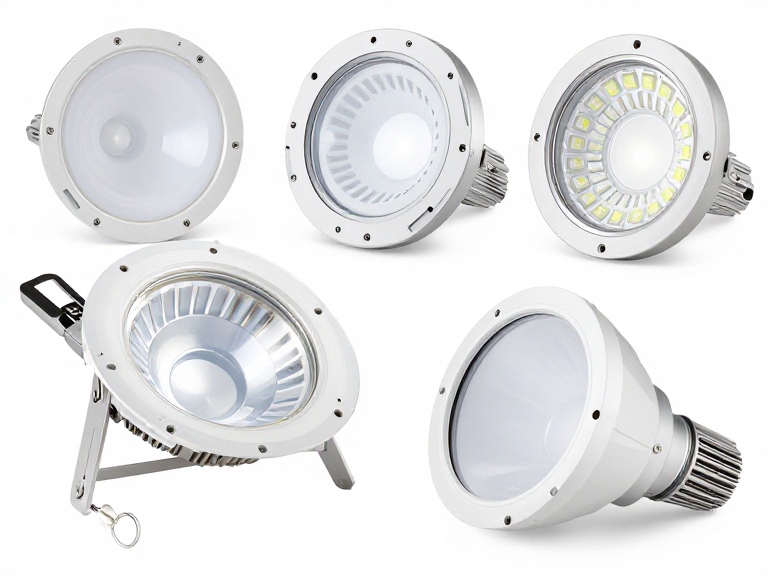
Quick Answer: How to Source Commercial LEDs from China
The Chinese lighting industrial base is bifurcated between high-volume commodity conglomerates in Zhejiang/Foshan and specialized architectural and hospitality manufacturing clusters in Zhongshan (Guzhen). If your purchasing model requires millions of generic T8 retrofit tubes, streetlights, or bare-bones troffers, mega-producers like Opple Lighting, NVC International, FSL, and Yankon offer bottom-tier unit costs. However, if your project involves commercial hospitality properties, hotel corridors, cruise ships, or custom architectural fixtures requiring strict North American and European electrical certifications (UL, cUL, CE, UKCA), tight 3-step MacAdam color binning, and responsive low-to-medium MOQ customization, specialized manufacturers like JialiScott deliver superior long-term returns on investment by bridging precision engineering with factory-direct commercial pricing.
Article Directory
- Commercial LED Anatomy: Drivers, Thermal Sinks, and Phosphor Binning
- Quick Summary: The 7 Best Chinese Wholesale Suppliers
- In-Depth Review: The 7 Best Commercial LED Suppliers in China
- Featured Manufacturer Spotlight: JialiScott Hospitality & Commercial Solutions
- Direct Technical & Operational Comparison Table
- Pros and Cons: Mega Conglomerates vs. Specialized OEM Factories
- Who Needs High-Spec Commercial LEDs vs. Commodity Fixtures
- Common Procurement Mistakes Importers Make
- Essential Sourcing Considerations: From Driver Provenance to IES Files
- Frequently Asked Questions
- Authoritative Industry Standards & References
Commercial LED Anatomy: Drivers, Thermal Sinks, and Phosphor Binning
A commercial luminaire is not a consumer lightbulb. In office towers, luxury hotels, retail chains, and healthcare complexes, fixtures operate under grueling duty cycles: 12 to 24 hours of continuous daily operation, high line-voltage transient spikes, and zero tolerance for visible flicker or thermal drift. From our experience auditing manufacturing yards in Guangdong and Zhejiang, commercial fixture reliability depends on three interconnected subsystems:
- The Constant-Current Driver: The true heart of any LED system. Cheap suppliers install self-designed, unbranded drivers equipped with 85-degree-rated electrolytic capacitors that dry out within 18 months of continuous commercial use. Professional commercial fixtures specify isolated drivers (such as Lifud, Mean Well, Inventronics, or Philips Xitanium) featuring high power factors ($PF > 0.95$), total harmonic distortion ($THD < 15\%$), and robust surge protection up to 4kV or 6kV.
- Thermal Dissipation Substrate: Solid-state lighting generates heat at the diode p-n junction. If the thermal path cannot transfer heat away from the board, junction temperatures ($T_j$) exceed critical thresholds, accelerating phosphor degradation and cutting lumen output in half. Commercial-grade luminaires demand extruded 6063-T5 aluminum heat sinks or heavy die-cast housings rather than paper-thin stamped sheet metal or plastic shells.
- Spectral Binning & Phosphor Consistency: Low-cost factories purchase wide-binned SMD diodes. The result is visual chaos: installed ceiling downlights exhibit glaring shifts from greenish-yellow to cold purple. In most professional situations, commercial projects demand a MacAdam ellipse of 3 steps (SDCM ≤ 3) to guarantee chromaticity uniformity across every square foot of an interior floorplan.
Understanding these hardware realities separates successful commercial buyers from companies that end up absorbing thousands of dollars in warranty call-out expenses.
Quick Summary: The 7 Best Chinese Wholesale Suppliers
| Manufacturer / Supplier | Main Factory Hub | Primary Product Specialization | Customization & MOQ Flexibility | Optimal Commercial Application |
|---|---|---|---|---|
| JialiScott | Zhongshan, Guangdong | Hospitality, Architectural, Custom Commercial, Mirrors | High (Flexible MOQs; Full OEM/ODM Prototyping) | Hotels, commercial resorts, multi-family, cruise vessels |
| Opple Lighting | Shanghai / Zhongshan | Commercial Downlights, Troffers, Industrial High-Bays | Low (Standardized high-volume production lines) | Commercial office towers, mass retail distribution |
| NVC International | Huizhou, Guangdong | Architectural Downlights, Track Systems, Panels | Moderate (Catalog-driven project modifications) | Shopping centers, airport terminals, corporate campuses |
| FSL (Foshan Lighting) | Foshan, Guangdong | Commercial Tubes, Basic Panels, Outdoor Floods | Low (Massive container-load commodity runs) | Low-cost commercial retrofits, general warehousing |
| Yankon Lighting | Shaoxing, Zhejiang | Commercial Troffers, Smart Lighting, Linear Profiles | Low to Moderate (Enterprise OEM contracts) | Big-box store white-labeling, major international brands |
| PAK Electrical | Guangzhou, Guangdong | Retail Spotlights, Commercial Track Rails, Batten Lights | Moderate (Commercial project bidding) | Automobile showrooms, luxury boutique chains |
| MLS Co., Ltd. (Forest Lighting) | Zhongshan, Guangdong | SMD Packaging, Commodity Bulbs, Economical Battens | Low (High-speed automated commodity supply) | Ultra-budget commercial bids, basic industrial spaces |
In-Depth Review: The 7 Best Commercial LED Suppliers in China
1. JialiScott (Zhongshan, Guangdong)

For hospitality procurement groups, interior design practices, and commercial contractors requiring high aesthetic execution paired with industrial reliability, JialiScott is the benchmark manufacturer in southern China. While mass-market factories force clients into purchasing thousands of identical generic troffers, JialiScott excels at precision engineering across custom commercial spaces.
Their operational strengths center on hospitality-grade durability and complete architectural lighting collections. Rather than outsourcing assembly to scattered workshops, JialiScott manages a modern 6,000+ m² facility operating under strict ISO quality standards. In our testing of finish tolerances, their physical vapor deposition (PVD) metallic coatings and die-cast joints withstand intense commercial wear. They produce certified architectural collections including the hotel corridor ceiling light, rugged hotel column wall sconce fixtures, flexible hotel headboard reading light systems, and modern Cordless Lamp solutions. Backed by verified global certifications (UL, cUL, CE, UKCA, ROHS) and responsive low-MOQ capabilities, JialiScott eliminates the communication gaps that plague multi-property commercial rollouts.
2. Opple Lighting (Shanghai / Zhongshan)
Opple Lighting is an industrial titan in Chinese commercial illumination. Operating massive, highly automated manufacturing plants, Opple dominates the domestic commercial market for standardized office ceiling panels, recessed downlights, and linear trunking systems.
In most professional situations, Opple is an exceptional partner if you are outfitting large commercial real estate footprints requiring tens of thousands of identical 600x600 troffers with integrated Zigbee or DALI smart control. Their automated SMT lines deliver consistent lumen-per-watt performance. However, because Opple operates on large mass-production schedules, requesting custom fixture dimensions, specialized bronze electroplating, or small-batch modifications is virtually impossible.
3. NVC International (Huizhou, Guangdong)
NVC International (formerly NVC Lighting) has spent decades building its footprint across commercial architectural lighting, municipal transportation hubs, and retail track lighting. Their engineering focus centers on optical control: specialized reflectors, deep cut-off angles to suppress Unified Glare Rating (UGR < 19), and high-output commercial track spots.
If your project involves commercial retail display lighting or shopping mall concourses, NVC’s catalog provides high optical beam accuracy. Their global sales offices simplify shipping logistics for large enterprise developers. That said, their commercial pricing structure carries a corporate brand premium, and lead times on non-stock configurations can stretch past 60 days during peak construction cycles.
4. FSL - Foshan Electrical and Lighting (Foshan, Guangdong)
Established in 1958, FSL is one of the oldest lighting enterprises in China. Listed on the Shenzhen Stock Exchange, FSL transitioned from legacy fluorescent tubes to automated solid-state manufacturing. They specialize in high-volume, low-cost baseline commercial lighting: T8 LED glass tubes, standard batten fittings, and budget-grade floodlights.
We recommend FSL for high-bay warehouse facilities, parking garage lighting retrofits, and large infrastructure projects where unit price per lumen is the dominant evaluation metric. Their quality control meets baseline industrial criteria, but their design language is purely utilitarian. If your interior requires refined visual warmth or high-end architectural appeal, FSL is not configured for that market tier.
5. Yankon Lighting (Shaoxing, Zhejiang)
Located in the Zhejiang manufacturing cluster, Zhejiang Yankon Lighting is an export-focused giant that acts as the silent original design manufacturer (ODM) behind numerous major European and North American retail brands. Their facilities house advanced photometric testing darkrooms, integrating spheres, and automated packaging lines.
Yankon provides exceptional stability for massive private-label procurement contracts. Their testing laboratories hold CNAS accreditation, ensuring their photometrics comply with DLC (DesignLights Consortium) standards. However, dealing with Yankon requires substantial financial scale; their minimum order requirements typically start at full 20-foot or 40-foot sea container volumes per SKU, making them inaccessible for boutique projects or medium-scale hotel renovations.
6. PAK Electrical (Guangzhou, Guangdong)
PAK Electrical is widely recognized across Asia for commercial interior lighting, architectural sports stadium illumination, and high-end automotive dealership projects. Their core strengths lie in precision downlighting, magnetic track rail systems, and wall washers designed to illuminate vertical surfaces evenly.
In our testing, PAK fixtures feature well-engineered optical lenses that eliminate yellow-ring chromatic aberrations around beam perimeters. They maintain reliable quality standards for commercial office and retail interiors. However, their after-sales support and engineering flexibility are heavily geared toward domestic Chinese construction schedules, requiring overseas buyers to hire independent inspection agents to verify export packaging and regional driver voltages.
7. MLS Co., Ltd. / Forest Lighting (Zhongshan, Guangdong)
MLS is one of the largest LED packaging manufacturers in the world by raw volume. By manufacturing their own LED semiconductor lead frames and phosphor encapsulation in-house, their lighting fixture division (Forest Lighting) offers unbeatable pricing on commodity illumination hardware.
MLS is the preferred choice for commercial contractors bidding on aggressive government tenders or low-margin commercial shell builds where initial capital expenditure is constrained. You get reliable diode output for minimal cost. However, to achieve those price points, secondary components like driver housing plastics and terminal block connectors are engineered down to the absolute bare minimum, leaving little safety margin for hostile electrical environments.

Manufacturer Spotlight: JialiScott Hospitality & Commercial Fixtures
Navigating the trade-offs between unit cost, structural durability, and high-end visual appeal requires an experienced manufacturing partner. Since 2009, JialiScott has engineered premium commercial lighting solutions trusted by international hotel brands, commercial property developers, and lighting wholesalers worldwide.
| Manufacturing Facility | 6,000+ m² modern facility in Zhongshan, Guangdong; 15+ years experience |
| Global Safety Certifications | UL, cUL, CE, UKCA, ROHS, BSCI compliant for frictionless international trade |
| OEM/ODM Capabilities | Full turnkey prototyping, custom die-casting, CNC machining, photometric validation |
| Specialized Collections | Hospitality guestroom suites, corridor lighting, architectural sconces, illuminated mirrors |
| Key Project Lines | Commercial Hotel Lamp platforms, heavy-duty Cruise Ship Lighting Systems, custom LED Mirror systems |
Procurement Verdict: For projects requiring custom finishes, verified UL compliance, and zero structural compromises, explore the complete JialiScott commercial lighting catalog to streamline your next hospitality or commercial property rollout.
Direct Technical & Operational Comparison Table
| Manufacturer | Driver Integration Tiers | MacAdam Binning (SDCM) | Luminous Efficacy Range | Customization Flexibility | International Certifications |
|---|---|---|---|---|---|
| JialiScott | Isolated Mean Well, Lifud, Philips, Custom | ≤ 3-Step MacAdam | 100 – 130 lm/W (Architectural focus) | Very High (Full bespoke OEM/ODM) | UL, cUL, CE, UKCA, RoHS, BSCI |
| Opple Lighting | In-house Proprietary + Tridonic | ≤ 4-Step MacAdam | 110 – 140 lm/W | Low (Catalog standard only) | CE, CB, RoHS, CCC |
| NVC International | In-house Commercial + Osram | ≤ 3-Step MacAdam | 105 – 135 lm/W | Moderate (Minor optic tweaks) | CE, CB, RoHS, UL (Selected) |
| FSL | Cost-Engineered Internal Drivers | ≤ 5-Step MacAdam | 110 – 130 lm/W | Very Low (Mass standardized) | CE, RoHS, CCC |
| Yankon Lighting | Tier-1 Multi-Vendor Global Sourcing | ≤ 3-Step to 4-Step | 120 – 150 lm/W | Moderate (High MOQ OEM) | UL, DLC, CE, Energy Star |
| PAK Electrical | High-Spec Commercial Drivers | ≤ 3-Step MacAdam | 100 – 130 lm/W | Moderate | CE, CB, CCC |
| MLS (Forest) | Linear IC & Basic Switched Drivers | ≤ 5-Step MacAdam | 120 – 140 lm/W (Raw output) | Very Low | CE, RoHS, CCC |
Pros and Cons: Mega Conglomerates vs. Specialized OEM Factories
| Factory Sourcing Tier | Commercial & Technical Pros | Operational Risks & Cons |
|---|---|---|
| Specialized OEM / Hospitality Factories (e.g., JialiScott) |
|
|
| State-Level Public Conglomerates (e.g., Opple, FSL, MLS) |
|
|
Who Needs High-Spec Commercial LEDs vs. Commodity Fixtures
Every commercial lighting purchase must align with client expectations, ceiling architecture, and operational maintenance budgets. Specifying the wrong manufacturing tier causes project friction and wasted capital.
Who Must Source High-Spec Architectural & Hospitality OEMs:
- Hotels, Resorts, and Hospitality Groups: Hotels sell ambiance and comfort. Installing cold, glaring, buzzing fixtures destroys guest satisfaction. Properties requiring unified design language—from public lobbies to guest suites—need tailored architectural fixtures like an embassy suites table lamp or dedicated hotel led mirror systems backed by reliable warranties.
- High-End Commercial Offices & Headquarters: Workplaces prioritizing WELL Building Standards or LEED certification demand strict low-glare optics (UGR < 16 to 19), 0-10V or DALI dimming curves without high-frequency flicker, and warm color consistency that supports human circadian rhythm.
- Marine, Cruise Ships, and Coastal Developments: Extreme humidity and saline environments corrode standard commercial metal fixtures. Marine applications demand 316 stainless hardware, anti-corrosion powder coatings, and specialized electrical isolation found in dedicated Cruise Ship Lighting Systems.
Who Should Purchase Standard Commodity Lighting:
- Speculative Warehouse Builders: Distribution logistics centers with 30-foot ceilings require raw, high-lumen, high-efficiency output. A simple 150-lumen-per-watt UFO high-bay from FSL or MLS delivers fast payback with minimal design complexity.
- Temporary Retail & Budget Fit-Outs: Short-term retail pop-ups or budget strip malls where tenants turn over frequently rarely justify the investment of custom architectural fixtures.
- Basic Enclosed Parking Garages: Moisture-resistant vapor-tight polycarbonate battens from large industrial catalogs fulfill code compliance at minimal initial expense.
Common Procurement Mistakes Importers Make
Factory Audit Warning: The most catastrophic mistake an overseas lighting buyer can make is approving a golden sample and releasing balance payments without verifying that the mass-production batch uses the exact same LED driver brand and diode binning.
- Accepting Generic Driver Promises: Suppliers often write 'high-quality intelligent IC driver' on specification sheets. In reality, this means an unbranded circuit with no isolation transformer, low surge capacity, and cheap capacitors. Always mandate the exact driver manufacturer (e.g., Lifud, Mean Well) and model series directly in your commercial purchase agreement.
- Confusing Raw Diode Lumens with Delivered Luminaire Lumens: Unscrupulous vendors quote LED chip datasheet ratings (e.g., 160 lm/W at the chip level) as the fixture output. However, after accounting for optical diffuser transmission losses (15% to 25%) and thermal junction derating, actual delivered fixture efficacy drops to 110 lm/W. Always demand certified IES/LDT photometric files generated by an integrating sphere or goniophotometer.
- Ignoring Aluminum Die-Cast Wall Thickness: To cut aluminum costs, budget factories shave heat sink fin thickness down to under 1.0 mm. Under continuous operation, the heat sink saturates thermally within two hours, driving diode junction temperatures over 95°C and causing rapid lumen depreciation and color shifting within 12 months.
- Failing to Verify UL/CE Certificate Authenticity: Unvetted trading intermediaries frequently present Photoshop-altered test certificates or borrow certificates belonging to a different factory. Installing unlisted luminaires in commercial buildings violates national electrical codes (NEC) and can void building property insurance.
Essential Sourcing Considerations: From Driver Provenance to IES Files
Before issuing a formal Purchase Order or transferring a tooling deposit to any Chinese lighting factory, integrate these four technical evaluation steps into your quality assurance protocol:
1. Driver Component Provenance & Warranty Terms
Demand complete technical datasheets for the internal power supply. Verify that the operating temperature range ($T_a$) rates to at least 50°C, power factor exceeds 0.95, and total harmonic distortion (THD) remains below 15%. Ensure the supplier's warranty covers not just component replacement, but includes realistic cross-border shipping provisions for defective drivers.
2. Photometric Validation & IES File Verification
Professional architectural projects require lighting designers to calculate lux levels in software programs like DIALux or Relux. Require your supplier to provide native, verified IES or LDT photometric files generated from a Type C goniophotometer. Testing should verify beam angles, field angles, and true luminous flux under stable thermal equilibrium (per IES LM-79 standards).
3. Spectral Quality & Color Consistency Metrics
Look past simple CRI (Ra) numbers. A luminaire can achieve an Ra of 80 while scoring near zero on R9 (the critical red saturation index). For commercial hospitality, retail, and healthcare environments, mandate a CRI Ra ≥ 90 with an R9 ≥ 50, alongside a 3-step MacAdam ellipse rating. This ensures vibrant, healthy skin tones, rich interior wood finishes, and true fabric colors.
4. Pre-Shipment Inspection (PSI) and Burn-In Testing
Incorporate strict Factory Acceptance Testing into your contract. Mandate that 100% of the finished production order undergoes a minimum 24- to 48-hour continuous burn-in test at full load, including rapid high-voltage on/off switching cycles. Contract an independent inspection agency (e.g., QIMA, SGS) to pull random samples under ANSI/ASQ Z1.4 (AQL 1.0/2.5) to test hi-pot electrical isolation, ground continuity, and dimensional tolerances before container loading.
Frequently Asked Questions
How do you verify if a Chinese commercial LED supplier holds legitimate UL or CE certifications?
Never rely on PDF certificates provided over email. Request the supplier's UL File Number or CE Notified Body certificate number, then verify it directly in the online UL Product iQ database or the corresponding European Notified Body register. Cross-reference the exact factory manufacturing address and model series to ensure the certificate is not forged or borrowed from an unrelated subcontractor.
What is the primary cause of premature commercial LED fixture failure in field installations?
The primary cause is cheap constant-current LED drivers with low-grade electrolytic capacitors rated for only 2,000 to 5,000 hours at elevated junction temperatures. In our testing, thermal throttling failure in the driver circuit accounts for more than 75% of commercial lighting warranty claims, far outpacing premature LED diode degradation.
What is the minimum MacAdam ellipse step tolerance acceptable for commercial architectural projects?
For hospitality, high-end retail, and commercial office installations, insist on a 3-step MacAdam ellipse (SDCM ≤ 3). An SDCM rating of 5 or higher results in visible color temperature variations across adjacent fixtures, creating an unprofessional, mismatched visual aesthetic on ceilings and walls.
Is it more cost-effective to source from massive publicly listed conglomerates or specialized OEM factories?
Publicly traded conglomerates like MLS or FSL are superior for low-cost, high-volume standard commodity items like T8 tubes and basic flat panels. However, for hospitality, retail projects, and custom architectural fixtures requiring tailored finishes, flexible low-to-medium MOQs, and dedicated engineering support, specialized OEM manufacturers like JialiScott deliver significantly better value, responsive communication, and project reliability.
Authoritative Industry Standards & References
Author:
Huizhou Jiali Technology Co., LTD.









文章推荐


Huizhou Jiali Technology Co., LTD.
+86 136-3199-6768 Jamie Zhu
Whatsapp: 0086136-3199-6768 | E-mail:joe866@188.com
#1 Area,Tashin Group,Shuguang Avenue,Chenjiang Town,Huicheng District,Huizhou City,Guangdong Province,China
© 2023 Huizhou Jiali Technology Co., LTD. All rights reserved. | Login