Welcome to the official website of [Huizhou Jiali Technology Co., LTD.]
Whatsapp: 0086136-3199-6768 | E-mail:joe866@188.com Latest Products | Get in Touch


10 Benefits of OEM Lighting Manufacturing for Hospitality Brands
2026-10-08 20:14:40
Click:
“
.jiali-oem-lighting-guide {
font-family: -apple-system, BlinkMacSystemFont
”
Specifying off-the-shelf catalog luminaires for a boutique hotel development, luxury resort renovation, or branded hotel property is one of the most expensive shortcuts in modern hospitality procurement. Hotel owners, general managers, and interior architecture directors frequently fall into the trap of purchasing retail-grade light fixtures or standard supplier SKUs to meet compressed opening dates. The operational fallout reveals itself within months of the grand opening: guestroom desk lamps develop loose sockets from heavy guest handling, bedside USB charging ports stop delivering power under fast-charging protocols, electrical switches snap under continuous commercial duty cycles, and light finishes corrode in coastal humidity. Hospitality lighting is an active piece of functional room architecture, not passive decorative furniture.
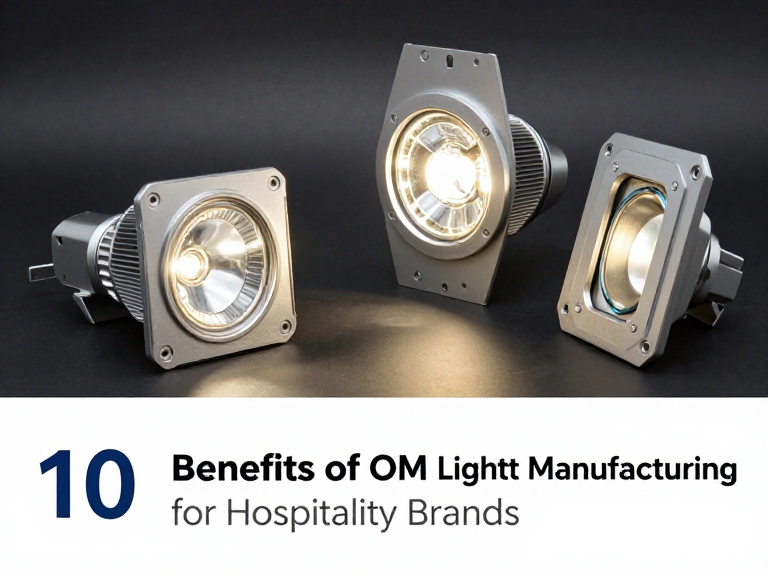
Securing the full benefits of OEM lighting manufacturing for hospitality brands requires understanding that contract lighting must survive commercial abuse while reinforcing brand identity. A guestroom table lamp in an urban lifestyle hotel undergoes hundreds of switch cycles weekly, serves as the primary bedside charging hub, withstands aggressive chemical wipe-downs by housekeeping staff, and establishes the aesthetic atmosphere that drives five-star guest reviews. Sourcing through certified OEM (Original Equipment Manufacturer) partners bridges the gap between interior design vision and factory engineering realities. From our experience auditing overseas production lines and managing FF&E (Furniture, Fixtures, and Equipment) hospitality rollouts, factory-direct custom manufacturing eliminates middleman distributor markups, guarantees international electrical safety certifications, and delivers unified brand aesthetics across entire property portfolios. We examine the ten primary benefits of OEM lighting manufacturing for hospitality brands, detailing financial returns, technical advantages, and supplier audit criteria to help your procurement team protect both bottom-line budgets and brand reputation.
Quick Answer: Why Choose OEM Lighting Manufacturing for Hospitality Brands?
Partnering with a specialized factory for OEM lighting manufacturing for hospitality brands delivers ten critical commercial and operational advantages: 1) Complete Bespoke Design Alignment, matching architectural intent without compromising on room proportions or custom finishes; 2) 30% to 50% Capital Cost Savings, cutting middleman broker markups via direct factory manufacturing; 3) Commercial Durability and Material Quality, utilizing heavy-gauge solid brass, reinforced steel ballasts, and commercial electroplating that withstand daily housekeeping wear; 4) Integrated Modern Technology, embedding high-speed USB-C PD charging ports, tamper-resistant AC convenience outlets, and wireless QI pads directly into fixture bases; 5) Strict International Safety Compliance, ensuring all fixtures arrive with UL, cUL, CE, and ETL certifications that protect against insurance liabilities; 6) Energy Efficiency and Uniform Chromatic Consistency, holding commercial LED chips to tight 2-step to 3-step MacAdam ellipse color bins (2700K/3000K) with 90+ CRI; 7) Long-Term Fleet Supply Continuity, guaranteeing access to identical replacement parts and lamp shades for future renovations; 8) Streamlined Supply Chain Scalability, coordinating large-scale room deliveries to match phased construction schedules; 9) Turnkey Cross-Category Product Execution, bundling guestroom lamps, corridor sconces, and illuminated vanity mirrors under one production umbrella; and 10) Enhanced Guest Experience and Direct RevPAR Growth, creating memorable ambiances that elevate perceived room value. In most professional situations, custom OEM contract manufacturing is significantly more cost-effective over a five-year operating cycle than buying consumer retail fixtures.
Table of Contents
- The Engineering Workflow: How OEM Hospitality Lighting Operates
- Quick Summary: The 10 Commercial OEM Benefits at a Glance
- In-Depth Analysis: 10 Benefits of OEM Lighting Manufacturing for Hospitality Brands
- Procurement Comparison Matrix: Direct Factory OEM vs. Trade Catalog Distributor vs. Retail Retailer
- Pros and Cons of Direct OEM Hospitality Lighting Manufacturing
- Who Needs Full OEM Manufacturing vs. Who Can Use Standard Stock
- Featured Manufacturing Partner: JialiScott Hospitality Lighting Solutions
- Costly Mistakes Procurement Teams Make When Sourcing Hotel Lighting
- Essential Factory Sourcing and Engineering Audit Criteria
- Expert Recommendation and Capital Procurement Verdict
- Frequently Asked Questions (FAQ)
- Authoritative References
The Engineering Workflow: How OEM Hospitality Lighting Operates
To evaluate contract lighting suppliers, procurement directors must understand what separates an Original Equipment Manufacturer from a trading broker. An authentic OEM lighting facility operates dedicated CNC metal cutting beds, stamping machines, precision welding stations, automated polishing lines, dust-free powder coating lines, and certified electrical assembly bays. The OEM process does not begin with a catalog; it begins with architectural drawings, rendering packages, and brand prototype guidelines.
The manufacturing sequence moves through five technical milestones:
- Design for Manufacturing (DFM) Review: Factory structural engineers review the designer's concept sketches. They calculate wall mount leverage, evaluate sheet metal thickness, design hidden heat sinks for LED drivers, and calibrate base ballast weights so tall bedside reading lamps do not tip over when guests pull the switch.
- Electrical Sub-System Engineering: Integrating high-voltage mains power with low-voltage USB charging modules requires electromagnetic compatibility (EMC) isolation. Engineers specify fire-rated internal wiring, certified rotary switches, and isolated power boards to prevent electrical interference from humming through guestroom audio systems.
- Prototype Tooling and Engineering Sign-Off: The factory creates fully functional physical samples, applying custom electroplated finishes (such as brushed champagne brass or oil-rubbed bronze). These golden samples undergo photometric testing using integrating spheres to measure exact lumen output, correlated color temperature (CCT), and color rendering index (CRI).
- Automated Mass Assembly: Following sample approval, multi-head machines produce stamped shells, weld structural brackets, assemble wire harnesses, and join parts using thread-locking compounds that resist rotational loosening.
- Pre-Shipment Quality Testing: Every completed fixture undergoes safety checks: a 100% automated dielectric withstand test (Hi-Pot test) to detect electrical leakage, torque pull testing on wire connections, and salt-spray testing on metal coatings to guarantee rust resistance.
Quick Summary: The 10 Commercial OEM Benefits at a Glance
The table below provides a concise operational reference to the ten primary benefits of OEM lighting manufacturing for hospitality brands, detailing physical mechanisms, financial returns, and operational impacts:
| Commercial Benefit | Underlying Engineering / Manufacturing Mechanism | Direct Financial & Cost Impact | Long-Term Operational Return |
|---|---|---|---|
| 1. Bespoke Brand Identity | Custom tooling, unique metal stamping, tailored scales | Higher perceived room value; supports elevated ADR | Creates distinct property aesthetics that drive brand loyalty |
| 2. 30% to 50% CapEx Savings | Eliminates middleman distributor margins; direct pricing | Saves $150 to $300+ per guestroom on lighting FF&E | Maximizes return on capital investment across multi-room builds |
| 3. Heavy-Duty Commercial Durability | Thick-gauge metals, weighted bases, robust coatings | Cuts replacement costs by 70% over five operating years | Withstands aggressive housekeeping and guest handling |
| 4. Smart Tech Integration | Embedded USB-A, 65W USB-C PD, and AC base outlets | Eliminates need for costly rewiring of bedside walls | Improves guest review scores for modern room convenience |
| 5. Universal Safety Certifications | Factory-backed UL, cUL, CE, ETL, and RoHS compliance | Protects property against insurance liability claims | Passes strict municipal electrical and fire safety audits |
| 6. Precise Chromatic Consistency | Tight MacAdam ellipse binning (≤ 3 steps); 90+ CRI | Eliminates mismatched color temperatures across suites | Creates uniform, welcoming ambient lighting across properties |
| 7. Long-Term Supply Continuity | Archived factory tooling, molds, and CAD drawings | Zero need to replace full room sets when one lamp breaks | Guarantees identical replacement units for future renovations |
| 8. Phased Logistics Scheduling | Coordinated ocean container dispatch tied to construction | Prevents costly off-site warehouse staging fees | Fixtures arrive on-site exactly when room floors are ready |
| 9. Cross-Category Production | Integrated factories producing lamps, mirrors, and fans | Consolidated container volume; reduced freight costs | Single vendor accountability across all guestroom lighting |
| 10. Enhanced Guest Satisfaction | Intuitive controls, balanced lighting, zero buzzing | Drives positive online guest reviews and ratings | Higher guest satisfaction translates into higher RevPAR |
In-Depth Analysis: 10 Benefits of OEM Lighting Manufacturing for Hospitality Brands
1. Complete Bespoke Design Alignment and Visual Brand Equity
Modern luxury and lifestyle hospitality brands trade on distinctive design. When a guest walks into an upscale hotel room, generic catalog lighting undermines the feeling of curated luxury. Retail fixtures are designed for residential living rooms: their scale is often too small for commercial guestroom desks, their shades are easily dented, and their finishes clash with custom furniture hardware.
OEM contract manufacturing allows architectural teams to design lighting from scratch. Whether your concept calls for brushed champagne metalwork, custom fluted ceramic bases, or statement Tiffany Lamp fixtures for a heritage lobby, the factory tools every detail to exact specifications. Proportions are calibrated to match bedside nightstands, lamp heights are engineered to prevent light glare when guests read in bed, and metal finishes are color-matched to the room's door hardware and plumbing fixtures, delivering a unified brand experience.
2. Substantial Capital Expenditure Savings (30% to 50% vs. Distributors)
The traditional FF&E procurement chain includes multiple layers of intermediaries: domestic trade showrooms, regional sales reps, stocking distributors, and procurement brokers. Each layer adds a 15% to 30% margin on top of base production costs. By the time a simple bedside lamp reaches the job site, its price has doubled or tripled.
Partnering directly with an established OEM lighting manufacturer eliminates these middleman markups. Hospitality brands access true factory-gate pricing. On a 250-room hotel project with four lighting fixtures per room (desk lamp, two bedside lamps, and a floor lamp), saving $60 to $120 per luminaire returns $60,000 to $120,000 directly to the owner's capital budget. These direct savings allow properties to invest in higher-grade materials, such as solid brass or smart dimming drivers, without exceeding FF&E allocations. Review direct sourcing networks in our industry guide on hotel lighting suppliers.
3. Commercial Durability and Material Longevity Under Heavy Occupancy
Consumer residential light fixtures are designed to be turned on once an evening and wiped with a feather duster once a month. In a busy hotel, guestroom lamps endure rough handling: guests yank pull-chains, pull cords from angles, bang heavy luggage against bases, and housekeeping staff spray harsh chemical disinfectants daily.
An experienced contract OEM builds fixtures for commercial endurance. Bases incorporate heavy internal cast-iron ballasts (typically weighing four to seven pounds) to prevent tip-overs. Metal surfaces undergo multi-stage electroplating and protective baking lacquers that pass 48-hour ASTM B117 salt-spray tests without peeling. Structural joints feature internal anti-rotation set screws that prevent lamp stems from twisting and shearing internal wiring. Sourcing through certified hospitality lighting manufacturers guarantees luminaires withstand high-turnover hospitality environments.
4. Integrated Charging and Connectivity Engineering
The number-one operational complaint from modern hotel guests is a lack of accessible bedside power outlets. Guests travel with multiple power-hungry devices: smartphones, laptops, smartwatches, and tablets. Requiring guests to crawl under nightstands to find empty wall outlets damages the guest experience and causes negative review feedback.
OEM manufacturing allows properties to integrate modern power hubs directly into fixture bases. Rather than attaching bulky aftermarket power strips, contract manufacturers engineer seamless charging interfaces, incorporating tamper-resistant 120V/230V AC convenience outlets alongside high-output USB-A and 45W–65W USB-C Power Delivery (PD) ports. This power integration is engineered safely: internal circuitry isolates low-voltage USB transformers from high-voltage wiring, preventing electrical hums from disturbing sleeping guests. Explore specialized configurations in our guide to hotel lamps with usb and outlet.
5. Universal Safety Certifications and Regulatory Peace of Mind
Deploying non-certified electrical fixtures in a commercial building is an unacceptable legal and operational liability. If an electrical short sparks a guestroom fire and investigators find that fixtures lack verified safety certifications, commercial insurers can deny claims, and local building authorities will fail the property's certificate of occupancy inspection.
Legitimate OEM contract lighting manufacturers maintain active certifications with international testing laboratories: Underwriters Laboratories (UL), Intertek (ETL), CE, and CSA. Every component—from the SPT-2 power cord and polarized plug to the phenoic socket and internal rocker switch—carries authentic certification file numbers. The factory provides formal documentation that passes building inspections and fire audits smoothly. For specialized environments with extreme safety mandates, check marine-grade installations in our Cruise Ship Lighting Systems department.
6. Precise Chromatic Consistency and High-CRI LED Architecture
Nothing looks cheaper in a hotel corridor or guestroom suite than mismatched color temperatures. When one bedside lamp glows with a harsh 4000K blue-white light while the adjacent desk lamp shines with a warm 2700K amber, the room feels disjointed and uninviting.
Contract OEM manufacturers manage LED binning carefully. They source high-efficiency LED chips held to tight 2-step or 3-step MacAdam ellipse tolerances, ensuring color temperatures across thousands of production fixtures remain visually identical. Furthermore, OEM hospitality fixtures specify high color rendering indexes (CRI > 90, with R9 red values > 50). High-CRI lighting flatters guest skin tones in bathroom mirrors, makes food look appetizing, and enhances the rich textures of room furnishings, creating a warm, welcoming ambiance.
7. Guaranteed Long-Term Supply Continuity and Spare Parts Availability
Retail lighting lines are volatile: big-box stores and consumer design retailers regularly discontinue lamp models every six to twelve months to make room for new seasonal collections. If a hotel buys retail lamps and five shades are damaged by guests two years later, finding identical replacements is often impossible, forcing the property to replace all the lighting in those rooms.
OEM lighting manufacturers preserve your design investments. Factories archive custom stamping dies, tooling molds, shade patterns, and digital CAD files under your account. If you need fifty replacement shades or twenty complete lamps three years later, the factory manufactures identical units from original tooling. This long-term supply continuity ensures your property preserves unified visual standards throughout its multi-year renovation cycle. Browse foundational hardware in our Hotel Lamp and Lighting Accessories collections.
8. Coordinated Shipping and Phased Job-Site Deliveries
Hospitality construction and renovation projects do not happen overnight; they proceed floor by floor. Delivering 1,500 light fixtures to a construction site before painting and carpeting are finished creates chaotic job-site conditions, leading to crushed boxes, stolen inventory, and expensive staging warehouse fees.
Experienced OEM manufacturers synchronize production schedules with your general contractor's construction milestones. Master ocean containers are packed and dispatched in phased waves. Boxes are labeled by room number, floor level, and fixture type, allowing unloading teams to deliver boxes straight to designated guestrooms without sorting through mixed warehouse palettes. This organized logistics management prevents job-site delays and reduces damage during unloading.
9. Turnkey Cross-Category Production Capabilities
Managing lighting procurement across multiple vendors—sourcing table lamps from one company, wall sconces from another, ceiling fans from a third, and bathroom vanity mirrors from a fourth—creates administrative friction and inconsistent metal finishes across rooms.
Comprehensive OEM manufacturing groups provide full cross-category production under one roof. The same engineering team that fabricates your bedside lamps can manufacture your corridor wall sconces, match the champagne brass finish on your Fan systems, produce portable rechargeable dining fixtures from our Cordless Lamp lineup, and engineer defogging, high-lumen bathroom mirrors from our LED Mirror collection. Review vanity mirror engineering in our guide on led backlit bathroom mirrors. Consolidating lighting under one qualified manufacturer ensures uniform finishes, lowers shipping costs through full container loads, and centralizes warranty accountability.
10. Elevated Guest Experience, Positive Reviews, and RevPAR Growth
Lighting is often the subtle factor that transforms a standard hotel room into a welcoming sanctuary. Research in hospitality design confirms that intuitive, warm, and flicker-free lighting directly influences guest mood, sleep quality, and perceived value. A room with warm bedside lighting, easy-to-reach switches, and fast phone charging creates an effortless, comfortable stay.
Guests remember friction points: a flickering bulb, a broken charging port, or an awkward switch tucked behind the nightstand. Conversely, when lighting controls are intuitive and ambient tones are warm and flattering, guests leave positive reviews on booking platforms. In modern hospitality, higher guest review scores directly drive occupancy rates and allow properties to command higher Average Daily Rates (ADR), turning an investment in quality OEM lighting into a driver of RevPAR (Revenue Per Available Room) growth.
Procurement Comparison Matrix: Direct Factory OEM vs. Trade Catalog Distributor vs. Retail Retailer
To help guide your corporate procurement strategy, the matrix below compares the commercial, operational, and technical dynamics across the three primary lighting sourcing paths:
| Evaluation Parameter | Direct Factory OEM (e.g., JialiScott) | Trade Catalog Distributor / Broker | Consumer Retail Store / Online Store |
|---|---|---|---|
| Direct Unit Cost | Lowest (True direct factory pricing) | Moderate to High (40% to 75% markup) | Highest (Full 100%+ retail markup) |
| Design Customization | Full (Custom scale, metal finish, outlets) | Limited (Select from fixed catalog variants) | Zero (Fixed consumer models only) |
| Commercial Build Durability | Heavy-duty (Weighted base, thick brass/steel) | Moderate to Commercial grade | Lightweight (Thin steel, hollow bases) |
| Embedded Tech (USB/AC) | Custom integrated (USB-C PD, fast charge) | Standard basic add-ons | Rarely integrated or low-spec |
| Safety Certifications | 100% Verified UL, cUL, CE, ETL files | Standard commercial compliance | Residential UL only (Non-commercial) |
| Re-Order Continuity | Guaranteed (Tooling archived for 5+ years) | Unpredictable (Lines drop seasonally) | Very Poor (Discontinued within 12 months) |
Pros and Cons of Direct OEM Hospitality Lighting Manufacturing
Before launching an OEM production project, procurement teams must weigh the commercial advantages against the logistical demands of direct factory manufacturing:
| Strategic Sourcing Advantages (Pros) | Operational Demands & Constraints (Cons) |
|---|---|
| Maximized Profit Margins: Saves 30% to 50% compared to middleman distributors, protecting project budgets. | Upfront Production Lead Times: Custom tooling, sampling, and ocean shipping require 8 to 14 weeks. |
| Unified Aesthetic Branding: Tailors metal finishes, scales, and shades to match property architecture. | Minimum Order Quantities (MOQs): Direct factory runs typically require minimums of 50 to 100 units per SKU. |
| Commercial-Grade Engineering: Heavy weighted bases and durable finishes withstand daily housekeeping use. | Detailed Pre-Production Specs: Requires clear technical drawings and finish approvals before tooling. |
| Single-Vendor Accountability: Coordinates guestroom lamps, mirrors, and sconces under one supplier. | Shipping Management: Procurement teams must coordinate ocean freight, customs, and delivery logistics. |
Who Needs Full OEM Manufacturing vs. Who Can Use Standard Stock
In our experience consulting for hospitality brands, your project scale and brand positioning dictate your procurement strategy.
Who Needs Direct OEM Lighting Manufacturing:
- Full-Service Hotel Developments & Flagship Resorts: Properties building 50 to 500+ rooms that require distinctive architectural design, integrated USB charging ports, and heavy-duty materials that withstand commercial wear.
- Boutique Lifestyle Hotel Groups & Historic Restorations: Design-led properties requiring bespoke metal patinas, custom proportions, or statement pieces from our Popular Lamp catalog that cannot be found in standard trade catalogs.
- Multi-Property Hotel Management Groups: Hospitality chains scaling regional rollouts that need archived tooling and reliable five-year supply continuity for replacement fixtures.
- Cruise Ship Lines and Luxury Marine Vessels: Marine hospitality environments that mandate flame-retardant shades, vibration-proof joints, and specialized non-corrosive finishes certified for harsh salt-air conditions.
Who Can Safely Use Standard Off-the-Shelf Stock Lighting:
- Small 5-Room Bed & Breakfasts: Independent country inns that need only a handful of fixtures can source quick-ship stock without meeting factory minimum order quantities.
- Temporary Pop-Up Event Lodges: Short-term festival glamping setups operating for a few weeks do not require custom commercial metalwork.
Featured Commercial Equipment: JialiScott Hospitality Lighting Solutions

Professional Wholesale Hotel Lamps & Home Lighting Manufacturer. Since 2009, JialiScott delivers premium lighting solutions worldwide — trusted by hospitality groups, wholesalers, and eCommerce leaders.
Operating a modern manufacturing complex exceeding 6,000+ m², JialiScott combines 15+ years of manufacturing excellence with full-service OEM and ODM contract engineering. From custom-stamped guestroom table lamps and heavy wall sconces to integrated illuminated LED vanity mirrors and commercial ceiling fixtures, JialiScott manufactures fixtures to international safety standards, supporting leading hotel brands worldwide.
Facility Infrastructure: 6,000+ m² Modern Production & Automated Assembly Facility
Manufacturing Heritage: 15+ Years of Dedicated Lighting Craftsmanship (Since 2009)
OEM / ODM Scope: Custom Tooling, DFM Engineering, Prototyping, Volume Manufacturing
Built-in Connectivity: Integrated 120V/230V AC Outlets, High-Speed USB-A & 65W USB-C PD
Quality Testing: 100% Hi-Pot Electrical Testing, Salt-Spray Corrosion Chamber Audits
Safety Certifications: UL, cUL, CE, ETL, and RoHS Verified Commercial Compliance
View complete engineering data on the official Luxury Collection Hospitality Room Light Table Lamp Wall Lamps with Outlets with Base Switch Hotel Lamps for Hotels and Guests product page.
Costly Mistakes Procurement Teams Make When Sourcing Hotel Lighting
In our field audits of delayed hotel openings and premature renovation refits, lighting problems almost always trace back to four common sourcing missteps:
- Purchasing Residential Fixtures to Cut Upfront Budgets: Retail home lamps are built with thin-gauge sheet steel, unweighted bases, and light-duty sockets. When placed in commercial guestrooms, housekeeping crews knock them over, thin metal stems bend, and loose electrical sockets create short-circuit hazards within months. Spending slightly more on commercial-grade OEM construction prevents premature replacement costs.
- Forgetting to Isolate Low-Voltage USB Power Transformers: Integrating convenience outlets and USB ports requires clean engineering. Budget manufacturers sometimes wire cheap, unshielded 5V transformers directly into the lamp base next to the light circuit. These low-cost transformers generate electronic interference that creates an audible buzz in quiet guestrooms. High-grade OEM designs deploy potted, shielded transformers with noise-filtering circuitry.
- Approving Finishes Based Solely on Digital Renders: Evaluating a metal patina or fabric shade on a computer monitor is a major risk. Digital screens do not show the real warmth, sheen, or texture of electroplated brass. Always mandate physical golden samples viewed under the property's target LED color temperature before approving mass production.
- Ignoring Packaging Drop-Test Standards (ISTA 1A/3A): Decorative lighting features delicate components: fabric shades, glass diffusers, and long metal stems. Shipping lamps across oceans in standard single-wall cardboard boxes leads to high in-transit breakages. Demand 5-ply double-wall export cartons with custom-molded high-density foam inserts that pass international ISTA drop tests.
Essential Factory Sourcing and Engineering Audit Criteria
Before issuing a commercial purchase order or transferring production deposits to an OEM lighting manufacturer, verify these four essential operational capabilities:
- Direct Factory Ownership vs. Trading Broker: Confirm that your prospective partner owns and operates their physical production workshops, stamping presses, and assembly lines. Schedule a live video audit or third-party factory inspection to verify facilities, workforce size, and internal testing equipment.
- Legitimate Safety Certification File Traceability: Ask for active UL, ETL, or CE certification file numbers. Check these numbers directly in public testing laboratory databases (such as the UL Product iQ directory) to confirm certifications belong to the manufacturing partner.
- Photometric and Color Temperature Testing Infrastructure: Ensure the factory operates an internal darkroom equipped with a calibrated integrating sphere and spectrophotometer. The manufacturer must supply certified IES files and photometric test reports verifying CRI, lumen output, and chromatic stability across production batches.
- Milestone-Based Contract Terms and Pre-Shipment Inspection: Structure your commercial contract around clear production milestones: 30% deposit upon formal engineering drawing and sample approval, with final balances paid only after a certified third-party inspection team (such as SGS or QIMA) performs AQL 2.5 random sampling audits on finished master cartons.
Expert Recommendation and Capital Procurement Verdict
In most professional situations, treating hotel lighting as an afterthought to be ordered from trade catalogs at the end of a project is a costly mistake. Lighting defines the visual ambiance of your property, serves as the guest's primary room charging station, and endures daily physical wear from guests and housekeeping.
For small, five-room boutique renovations with immediate deadlines, sourcing available commercial catalog stock can be a pragmatic choice. However, for full-scale hotel builds, branded multi-room renovations, and design-led lifestyle developments, investing in direct OEM lighting manufacturing is the smarter business decision. Partnering with an experienced, vertically integrated manufacturer like JialiScott saves your project 30% to 50% in middleman markups, gives your design team complete custom freedom, guarantees certified electrical safety, and delivers durable, beautiful luminaires that elevate guest satisfaction and drive long-term RevPAR growth.
Frequently Asked Questions (FAQ)
What is the difference between OEM lighting and standard retail lighting?
OEM lighting is custom-engineered and manufactured directly by the factory to match the client's exact design specifications, room proportions, metal finishes, and technical requirements (such as integrated USB-C PD charging ports and commercial weighted bases). Standard retail lighting consists of pre-made consumer fixtures sold through stores and catalogs, offering zero customization and lighter construction intended for low-traffic homes.
How much money can a hotel project save by sourcing lighting directly from an OEM manufacturer?
By bypassing trade showrooms, middleman distributors, and sales reps, hotel developers typically save 30% to 50% on their lighting FF&E budgets. On a standard 150-to-250-room hotel project, this direct factory pricing regularly saves $50,000 to $120,000+ while delivering heavier, commercial-grade materials.
What safety certifications are required for commercial hotel lighting?
In North America, commercial hotel lighting must be certified to UL 153 (portable electric lamps) or UL 1598 (hardwired luminaires), tested by recognized laboratories like Underwriters Laboratories (UL) or Intertek (ETL). In European and international markets, fixtures must carry CE marking, comply with Low Voltage Directive (LVD) standards, and meet RoHS environmental mandates to ensure fire safety and pass municipal building inspections.
What is the typical production lead time for custom OEM hospitality lighting?
Custom OEM lighting typically requires 8 to 14 weeks from initial CAD drawing approval to job-site delivery. This includes 2 to 3 weeks for physical prototype creation, 4 to 6 weeks for mass factory production and finishing, and 3 to 4 weeks for ocean shipping and customs clearance, making early planning essential during the interior design phase.
Why are integrated USB charging ports important on hotel bedside lamps?
Modern travelers carry multiple devices that need nightly charging. Integrating high-speed USB-A and 45W–65W USB-C Power Delivery (PD) ports directly into lamp bases gives guests convenient bedside power without hunting for wall outlets behind furniture, improving guest comfort and review scores while eliminating the need for expensive electrical wall rewiring.
Authoritative References
- Illuminating Engineering Society (IES): Hospitality Lighting Guidelines and Lighting Design Practices (RP-30)
- Underwriters Laboratories (UL): Standard for Portable Electric Luminaires (UL 153) and Hardwired Fixtures (UL 1598)
- ASTM International: Standard Practice for Operating Salt Spray (Fog) Apparatus for Surface Coating Corrosion Testing (ASTM B117)
Author:
Huizhou Jiali Technology Co., LTD.









文章推荐


Huizhou Jiali Technology Co., LTD.
+86 136-3199-6768 Jamie Zhu
Whatsapp: 0086136-3199-6768 | E-mail:joe866@188.com
#1 Area,Tashin Group,Shuguang Avenue,Chenjiang Town,Huicheng District,Huizhou City,Guangdong Province,China
© 2023 Huizhou Jiali Technology Co., LTD. All rights reserved. | Login