Welcome to the official website of [Huizhou Jiali Technology Co., LTD.]
Whatsapp: 0086136-3199-6768 | E-mail:joe866@188.com Latest Products | Get in Touch


The 6 Main Light Categories for Hotel Design: An Expert Sourcing Guide
2026-08-17 20:44:00
Click:
“
From our experience outfitting high-end hospitality properties globally, navigat
”
From our experience outfitting high-end hospitality properties globally, navigating the primary Light Categories for hotel spaces requires rigorous commercial judgment. The 6 main light categories for hotel environments are Ambient Ceiling Lights, Statement Pendants and Chandeliers, Architectural Wall Sconces, Task-Oriented Table Lamps, Spatial Floor Lamps, and F&B Cordless Lamps. A successful commercial interior design does not rely on a single light source; it strategically layers these six categories to guide guest behavior, ensure operational safety, and elevate the architectural aesthetic. If you fail to layer these categories correctly, your multi-million-dollar renovation will inevitably feel like a sterile hospital corridor rather than a luxury retreat.

The hospitality industry operates on an uncompromising aesthetic standard. When guests walk into a lobby, guestroom, or restaurant, the lighting dictates their immediate psychological reaction to the brand. Unfortunately, many procurement managers and junior designers treat a Hotel Lamp merely as a commodity to cross off a budget spreadsheet. This is a catastrophic commercial mistake. Cheap, poorly layered lighting ruins expensive architecture.
In most professional situations, hospitality lighting is not just about illumination; it is about creating distinct zones of intimacy, functionality, and brand identity. You must understand not only what each fixture does, but whether it is actually worth using in specific zones of your property. In this comprehensive guide, we dissect the core Light Categories for hotel applications, examining their operational mechanics, commercial benefits, and specific buying considerations to ensure your next hospitality project performs flawlessly.
Quick Answer: The 6 Core Hotel Lighting Categories
- Ceiling Lights: Provides the foundational ambient layer necessary for general navigation and housekeeping operations.
- Pendants & Chandeliers: The visual focal points designed to establish the aesthetic scale of lobbies, ballrooms, and dining areas.
- Wall Lamps (Sconces): Essential for corridor rhythm, bathroom vanity task lighting, and bedside reading without cluttering nightstands.
- Table Lamps: Highly localized task lighting for guestroom desks and ambient glow for lounge seating.
- Floor Lamps: Fills architectural dead spaces and creates intimate reading zones in larger suites or public lounges.
- Cordless Lamps: The modern standard for restaurant and bar tables, eliminating messy cables and hazardous open-flame candles.
Table of Contents
- What Are the Light Categories for Hotel Spaces?
- Deep Dive: The 6 Main Categories
- How It Works: The Art of Layering
- Commercial Benefits of Proper Specification
- Limitations and Operational Realities
- Who Should Use These Categories
- Who Does Not Need Complex Lighting
- Common Mistakes in Hospitality Lighting
- Critical Buying Considerations
- Expert Recommendation: Jialiscott
- Essential Comparison Tables
- Frequently Asked Questions (FAQ)
What Are the Light Categories for Hotel Spaces?
The concept of Light Categories for hotel design refers to the specific classification of luminaires based on their physical placement and functional intent. Commercial lighting design is built on three core layers: ambient (general illumination), task (focused light for specific activities), and accent (highlighting architectural or artistic features). The 6 physical categories of fixtures are the tools designers use to execute these layers effectively.
A hospitality environment is unique because it must transition seamlessly from a bright, energetic space during morning check-ins to a moody, intimate sanctuary at night. Achieving this requires fixtures that are commercial-grade—meaning they possess heavy-duty components, tamper-proof hardware, and rigorous safety certifications that residential fixtures lack.
Deep Dive: The 6 Main Categories
1. Ambient Ceiling Lights
These fixtures form the baseline illumination of any property. Hotel ceiling lights include recessed downlights, flush mounts, and track lighting. For commercial users, these must be specified with high Color Rendering Index (CRI) LEDs to ensure carpets and wall coverings do not look washed out. They are the workhorses of the lighting plan, relied upon heavily by housekeeping staff to clean rooms efficiently.
2. Pendants and Chandeliers
This category is the jewelry of the building. Hotel pendant lights and massive chandeliers are deployed in double-height lobbies, above reception desks, and in grand ballrooms to draw the eye upward and communicate luxury. These fixtures are rarely relied upon for primary illumination; instead, they command visual authority.

Hospitality Hotel Marriott Buffalo Niagara Lobby Chandelier
A prime example of a statement piece within the Light Categories for hotel spaces, this custom chandelier dictates the aesthetic rhythm of the Marriott lobby.
- Application: Hotel Lobby Lounge
- Item Number: H-C14
- Material: Metal + Acrylic
- Light Source: Energy-efficient LED
- Finish: Premium Brushed Brass
3. Architectural Wall Sconces
Sconces are critical for spatial defining. Hotel wall lamps are utilized to break up the monotony of long, endless guest corridors. Inside the guestroom, bedside sconces have largely replaced traditional nightstand lamps in modern design, freeing up valuable surface area for the guest's personal devices while providing localized reading light.
4. Task-Oriented Table Lamps
Despite the shift toward integrated sconces, hotel table lamps remain a vital category for executive desk areas and lobby lounge seating. In our testing, guests still heavily utilize desk lamps for working or dining in-room. These fixtures must feature heavy, weighted bases to prevent accidental tipping and increasingly incorporate built-in USB charging ports for modern convenience.
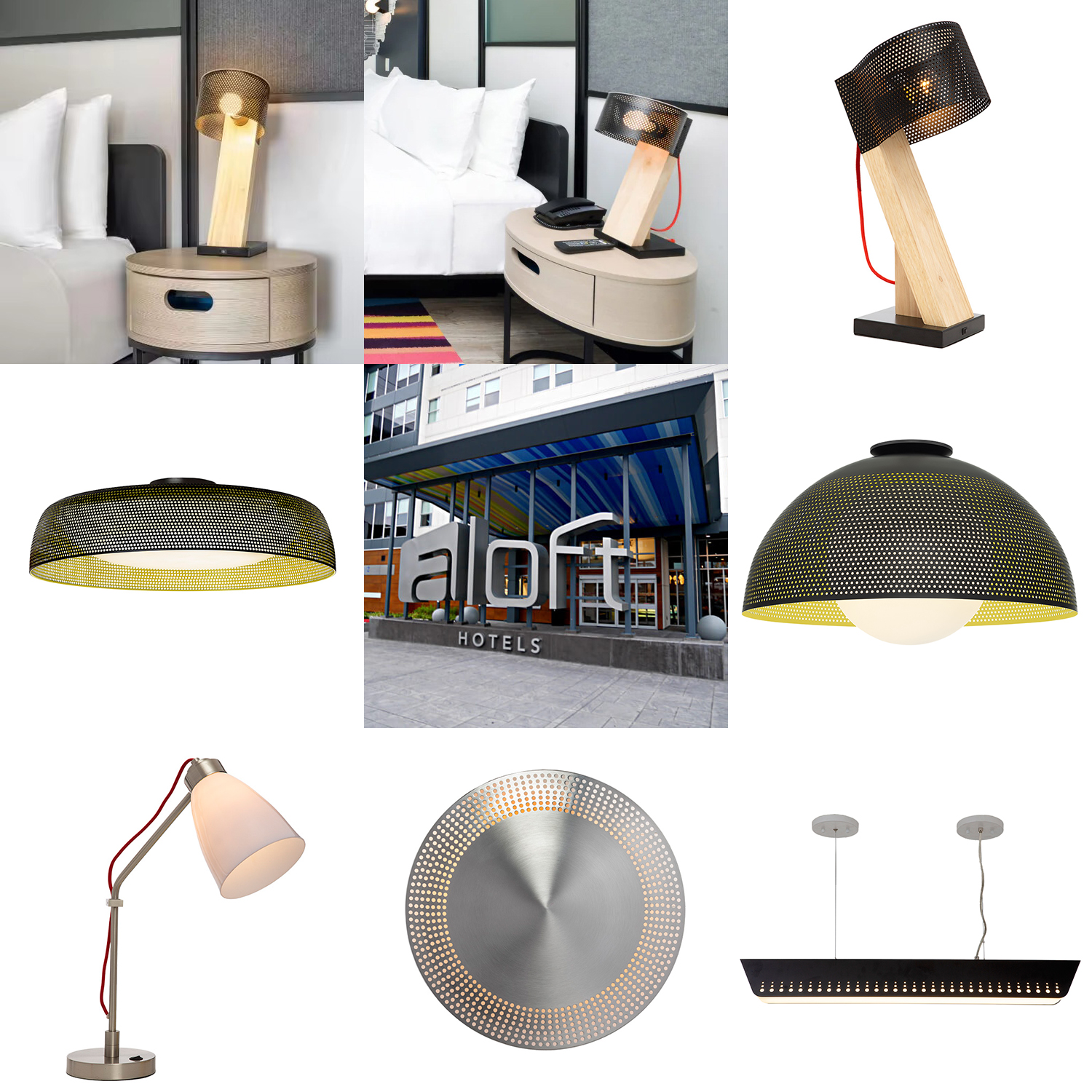
Aloft Hotels by Marriott Guestroom Suite Lighting Package
This coordinated suite package demonstrates how table lamps and wall sconces must unify visually to maintain brand standards across different functional zones of the guestroom.
- Application: Guestroom Suite (Nightstand, Desk, Wall)
- Brand: Aloft Hotels by Marriott
- Design Intent: Modern, cohesive, and highly functional task lighting
5. Spatial Floor Lamps
For large corner suites, executive lounges, and lobby reading nooks, hotel floor lamps fill architectural voids. They bring the light source down to the human scale, making expansive, high-ceilinged rooms feel cozy and approachable. A well-placed floor lamp is often the difference between a sterile waiting area and an inviting lounge space.
6. Cordless & Portable Lamps
The hospitality food and beverage sector has undergone a massive shift toward the Cordless Lamp. Restaurant operators are eliminating open-flame candles and hardwired table lights in favor of rechargeable LED lamps. They offer variable dimming, reduce fire liabilities, and allow staff to dynamically rearrange dining tables for large parties without worrying about floor outlets.
How It Works: The Art of Layering
Employing these 6 Light Categories for hotel operations is a mathematical exercise in lumen calculation and visual hierarchy. Ambient ceiling fixtures create the canvas. The statement chandelier acts as the anchor point. Wall sconces graze the walls to highlight texture and artwork. Table and floor lamps bring illumination down to eye level. By combining these categories on an automated, dimmable control system, property managers can shift the mood of the hotel seamlessly from a crisp, productive morning environment to a warm, relaxing evening atmosphere.
Commercial Benefits of Proper Specification
We recommend heavily prioritizing the quality of your lighting fixtures because the ROI is immediate. Premium lighting dictates the perceived value of the room rate. If a guest steps into a bathroom illuminated by a harsh, blue-tinted fluorescent ceiling light, the entire suite feels cheap. Furthermore, utilizing custom hotel lighting fixtures built with commercial-grade LED engines drastically reduces energy consumption and minimizes the labor costs associated with maintenance teams constantly replacing burnt-out bulbs.
Limitations and Operational Realities
You must use practical judgment: complex lighting layers require complex infrastructure. Installing hardwired wall sconces and heavy lobby chandeliers requires substantial upfront capital expenditure (CAPEX) for electrical conduit routing and structural ceiling reinforcements. Furthermore, if you specify a highly unique, irreplaceable glass shade for a Popular Lamp design, and a guest breaks it three years later, finding a replacement can be an operational nightmare. Scalability and supply chain reliability are paramount.
Who Should Use These Categories
For commercial users and full-service operators: Four and five-star hotels, luxury boutique properties, and premium dining establishments must deploy all six light categories. Guests paying premium rates demand layered, controllable lighting that flatters their appearance and provides functional utility for work and relaxation.
Who Does Not Need Complex Lighting
For heavy-duty applications in ultra-budget motels: Economy roadside lodging prioritizing raw durability and extreme cost-cutting generally does not require complex layering. A central ceiling fixture and a basic desk lamp are sufficient. Over-engineering the lighting in an environment where the average stay is under ten hours simply wastes capital.
Common Mistakes in Hospitality Lighting
In our testing and property audits, the most catastrophic mistake designers make is mismatching Color Correlated Temperature (CCT). Mixing a 2700K (warm white) table lamp with a 4000K (cool white) wall sconce in the same room creates visual chaos and physical discomfort for the guest. Another amateur error is specifying residential fixtures for commercial use. A residential table lamp will not survive hotel housekeeping; commercial table lamps must have heavy bases, durable finishes, and tamper-resistant shade rings.
Critical Buying Considerations
Before issuing a purchase order for Light Categories for hotel projects, mandate the following specifications:
- Commercial Certifications: Fixtures must carry UL, ETL, or CE listings for commercial environments to comply with fire codes.
- ADA Compliance: Wall sconces installed in public corridors must not protrude more than 4 inches from the wall to comply with the Americans with Disabilities Act.
- Maintainability: Can the LED driver be replaced without discarding the entire fixture? Is the finish resistant to heavy-duty commercial cleaning chemicals? For classic styles like a Tiffany Lamp, is the stained glass protected from accidental guest impact?
Expert Recommendation
The Jialiscott Verdict
Is it actually worth using a specialized hospitality lighting manufacturer rather than buying off-the-shelf retail fixtures? Absolutely. Retail fixtures are built to sit gently in a living room, not to withstand the relentless cycle of a 300-room hotel.
At Jialiscott, we engineer lighting solutions specifically for the rigors of the hospitality sector. We recommend that property developers engage with our OEM/ODM teams early in the design phase. By coordinating all 6 Light Categories for hotel applications through a single trusted manufacturer, you guarantee that metal finishes match flawlessly across different fixture types, LED color temperatures are uniformly binned, and your supply chain is insulated against delays. Do not risk your hotel's aesthetic on fragmented, unverified retail sourcing.
Essential Quick-Reference Tables
| Category | Primary Function | Optimal Hotel Location |
|---|---|---|
| Ceiling Lights | Ambient general illumination | Guestroom entry, bathrooms, corridors |
| Pendants & Chandeliers | Statement scale and visual impact | Lobby double-heights, dining rooms |
| Wall Sconces | Architectural rhythm & localized task | Bedside reading, corridor grazing |
| Table Lamps | Task execution & mid-level ambient | Executive desks, nightstands |
| Floor Lamps | Spatial filling & intimate zoning | Corner suites, lobby lounges |
| Cordless Lamps | Flexible, un-tethered table illumination | Restaurant tables, outdoor bar patios |
| Specification | Residential Retail Fixtures | Jialiscott Hospitality Fixtures |
|---|---|---|
| Build Weight & Base | Lightweight, prone to tipping | Heavy, cast-iron weighted bases |
| Switching Mechanism | Flimsy inline cords or twist knobs | Heavy-duty base rockers or integrated toggles |
| Technology Integration | Rarely included | Integrated USB-A/C and convenience outlets |
| Finish Durability | Standard retail plating | Commercial-grade lacquer to resist cleaning agents |
| Pros (Why it is worth executing) | Cons (Limitations to consider) |
|---|---|
| Allows dynamic control of the room's mood throughout the day. | Requires complex electrical wiring and dimming control panels. |
| Highlights expensive architectural finishes and artwork perfectly. | Higher initial CAPEX budget required for multiple fixture types. |
| Provides guests with functional light exactly where they need it. | More fixtures equate to a larger inventory of replacement parts to manage. |
| Eliminates glare and harsh shadows caused by a single central light. | Demands strict coordination to ensure color temperatures (CCT) do not clash. |
| Hotel Zone | Recommended CCT (Kelvin) | Design Rationale |
|---|---|---|
| Lobby / Reception | 3000K | Warm, inviting, yet crisp enough for staff to process documents. |
| Guestroom (General) | 2700K | Replicates the warm glow of incandescent bulbs; promotes relaxation and sleep. |
| Bathroom Vanity | 3000K - 3500K | Crisp, accurate light necessary for guest grooming and makeup application. |
| High-End Restaurant | 2400K - 2700K | Extremely warm and intimate; flatters skin tones and plating aesthetics. |
Frequently Asked Questions (FAQ)
Why do hotels use wall sconces instead of bedside table lamps?
In most professional situations, modern hotel design favors hardwired wall sconces to preserve space on small nightstands. Guests travel with multiple devices (phones, tablets, laptops) that require nightstand real estate. By moving the light source to the wall, designers free up that surface area while also preventing the risk of a heavy table lamp being knocked over and broken.
What makes a lighting fixture ADA compliant for hotel corridors?
To comply with the Americans with Disabilities Act (ADA) in the United States, a wall-mounted lighting fixture installed in public corridors or walkways cannot protrude more than 4 inches from the wall if it is mounted between 27 and 80 inches above the finished floor. This ensures that visually impaired individuals using walking canes do not accidentally strike the fixture.
Are cordless table lamps durable enough for commercial restaurant use?
Yes, provided you purchase commercial-grade cordless lamps. High-quality hospitality cordless lamps feature heavy die-cast metal bodies, IP54+ water resistance to survive drink spills, and high-capacity lithium-ion batteries capable of lasting 12 to 24 hours on a single charge. Cheap retail cordless lamps will degrade quickly under the daily charging cycles required in a hotel restaurant.
Authoritative Industry Standards & References
To ensure your hospitality lighting meets the highest standards of safety, efficiency, and ergonomic performance, we base our engineering and design recommendations on guidelines from the following authoritative organizations:
- Illuminating Engineering Society (IES): The recognized technical and educational authority on illumination, publishing the foundational standards for commercial and hospitality lighting design protocols. Visit IES
- Americans with Disabilities Act (ADA) Standards: Federal civil rights law dictating strict dimensional and protrusion limits for wall-mounted fixtures in public accommodations to ensure safe navigation. Visit ADA.gov
- U.S. Department of Energy (DOE): Sets the regulatory benchmarks for commercial lighting efficacy, LED energy consumption, and sustainable building codes. Visit DOE
Author:
Huizhou Jiali Technology Co., LTD.









Prev : 7 Best Above Mirror Bathroom Lights Ideas for 2026
Next : 9 Popular Commercial Lighting Brands in the World Evaluated (2026 Guide)
文章推荐


Huizhou Jiali Technology Co., LTD.
+86 136-3199-6768 Jamie Zhu
Whatsapp: 0086136-3199-6768 | E-mail:joe866@188.com
#1 Area,Tashin Group,Shuguang Avenue,Chenjiang Town,Huicheng District,Huizhou City,Guangdong Province,China
© 2023 Huizhou Jiali Technology Co., LTD. All rights reserved. | Login